What Are Custom Modified Plastics, and Why Source Them in China?
The short answer: China is the fastest and cheapest route to custom modified plastics, but only when your supplier compounds in-house, runs its own test lab, and ships free trial samples. Skip those three checks and you are buying a datasheet, not a compound. Here are the four checks that separate a working compounder from a reseller.
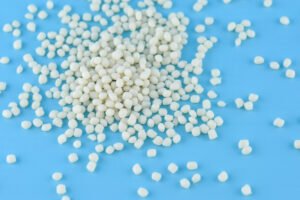
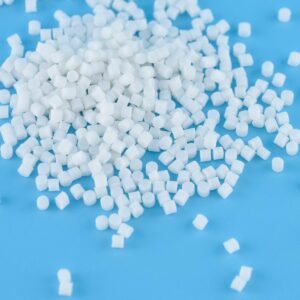
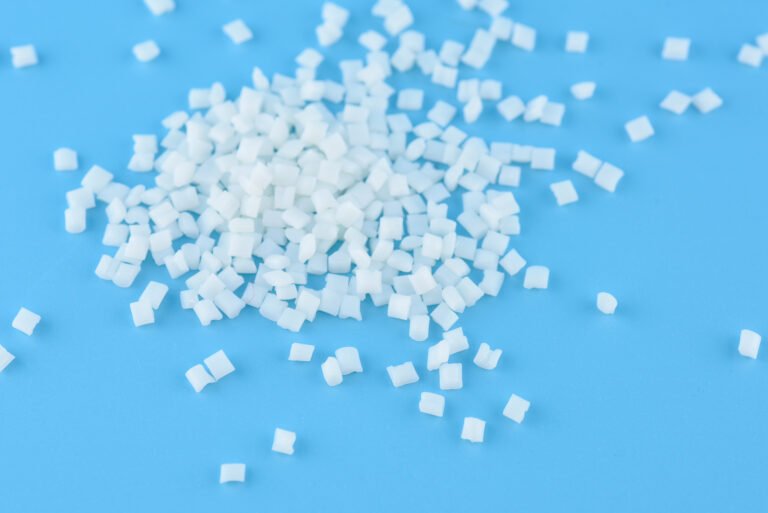
Custom modified plastics start with a base resin — PP, PA, PC/ABS, or PBT — or a thermoplastic elastomer such as TPE, TPU, TPV, or TPEE. The compounder then changes the properties to fit your part: glass-fiber loading for stiffness, flame retardants for UL94 ratings, impact modifiers for toughness, or a custom color matched to Pantone or RAL. The result is a grade that does not exist on a distributor’s shelf.
The reason buyers source from China is simple math. Compounding happens close to raw material supply and the molding market, with lower energy and labor costs than Western toll compounders. That means lower unit cost and faster turnarounds on both sampling and production. The trade-off is that you are far from the factory floor, so the checks below are what protect you.
Does the Supplier Compound In-House, or Just Resell a Datasheet?
The single most important question to ask. A factory that runs its own twin-screw extrusion lines and keeps a technical team on staff can tweak a formula for you — raise tensile strength, adjust the melt flow index, add a flame-retardant package, or rework a color. A trading company can only forward the original datasheet and add a margin. If they cannot tell you how the formula would change to hit your spec, they are not compounding it.
Ask directly about formulation capability. Can they load glass fiber from 10% to 50%? Hold UL94 V-0 at your wall thickness? Hit a shore range from 10 Shore A to 72 Shore D? A real compounder answers with numbers, not a brochure. Ask for a photo or video of the extrusion line, or plan a plant visit — most engineering plastic compounds suppliers in China will show you the floor.
How Do You Verify Quality Without Your Own Lab?
You do not need a lab in China — you need proof that the factory has one. Require ISO 9001 as a baseline and IATF 16949 if the parts are automotive. Then confirm the lab batch-tests every production lot and issues a Certificate of Analysis, not a one-off type approval. The test matrix for a PA66 compounds order looks like the table below.
| Test | Standard / Method | What it catches |
|---|---|---|
| Tensile strength & elongation | ISO 527 / ASTM D638 | Wrong base resin or filler loading |
| Impact strength (Izod / Charpy) | ISO 180 / ISO 179 | Brittleness, failed toughening |
| Melt flow rate (MFR) | ISO 1133 / ASTM D1238 | Processability drift, regrind contamination |
| Hardness | ISO 868 / ASTM D2240 (Shore A / D) | Off-spec softness or rigidity |
| Environmental compliance | RoHS, REACH, FDA | Export blocks, non-compliant additives |
Two more habits protect you after the tests pass. First, ask for the Certificate of Analysis with every shipment, not just the first one. Second, confirm the factory retains a sample from every batch — if a lot ever fails in your molding plant, the retained sample tells you whether the drift happened at the compounder or in your own process.
Will You Get the Same Compound on Every Batch?
Batch-to-batch drift is the most common failure in China sourcing, and it is almost always a raw material problem. A stable supplier locks the base resin sources — SEBS, TPU, EPDM, PBT — and keeps controlled regrind ratios, because switching a resin grade mid-contract changes viscosity, color, and impact. Ask whether your formula is locked and whether they hold safety stock of your specific base resins.
Capacity matters as much as chemistry. A small line may nail a 25 kg sample and then stretch a production run over weeks. Ask for monthly compounding capacity and current loading before you place the first PO, and confirm lead times are quoted against a defined volume, not “as soon as possible.”
Can They Ship Free Samples Before You Commit?
A compounder confident in its work will send a free trial sample of 5–25 kg for trial molding, no purchase order required. Use it: mold a test batch, check the melt flow, the surface finish, and the mechanicals before you commit to a production run. Never place a first order on a datasheet alone.
Pay attention to who answers your questions. Bilingual technical support — an engineer, not only a salesperson — who can discuss melt flow index, shore hardness, and UL94 behavior in your language is a sign the factory can hold a spec through development. If every question is routed through a middleman, the spec you approve may not be the spec that gets made.
FAQ
How large is a free trial sample for custom modified plastics? Most compounders ship 5–25 kg free for trial molding. That is enough to run a short test run on your tool before you commit to production.
What hardness range can custom TPE and TPU cover? Custom thermoplastic elastomers are typically compounded from 10 Shore A (very soft) up to 72 Shore D (rigid), so one supplier can cover soft-touch grips through structural overmolds.
Which certifications should a compounder hold? ISO 9001 is the minimum. For automotive parts, require IATF 16949. Ask for current RoHS, REACH, and FDA test reports if the part touches food, skin, or exports to the EU or US.
How do I confirm the production batch matches my approved sample? Compare the Certificate of Analysis against your approved sample’s values, and keep your own retained sample. A serious compounder keeps its own retained sample from every batch, so any dispute can be traced to a specific lot.
Send Your Spec
If you have a target datasheet — hardness, tensile, flame rating, color — send it over and we will quote it and ship a 5–25 kg trial sample. Contact FitPoly and talk to an engineer, not a script.